Over the past few years, the eCommerce industry has shifted dramatically. Traditional "mass product uploading" dropshipping strategies are becoming less effective, while branded stores with better customer experience, faster fulfillment, and long-term visibility are growing rapidly.
In 2026, successful Shopify dropshipping businesses are no longer built around random trending products alone. Instead, they focus on:
Brand positioning
Reliable suppliers
Automated fulfillment
Social media marketing
Customer retention
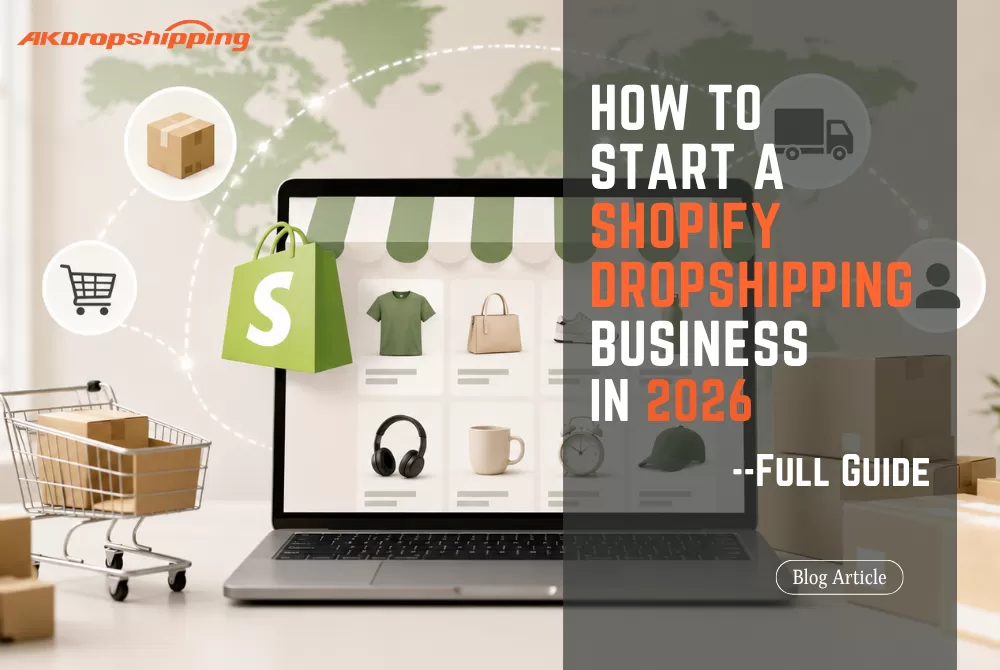
This is exactly why Shopify has become one of the best platforms for modern dropshipping businesses. With powerful automation, scalable apps, and global payment support, Shopify allows beginners to launch and operate an online business without holding inventory.
In this guide, you'll learn the complete step-by-step process of how to start Shopify dropshipping in 2026 — from choosing a niche and suppliers to marketing and scaling your store.
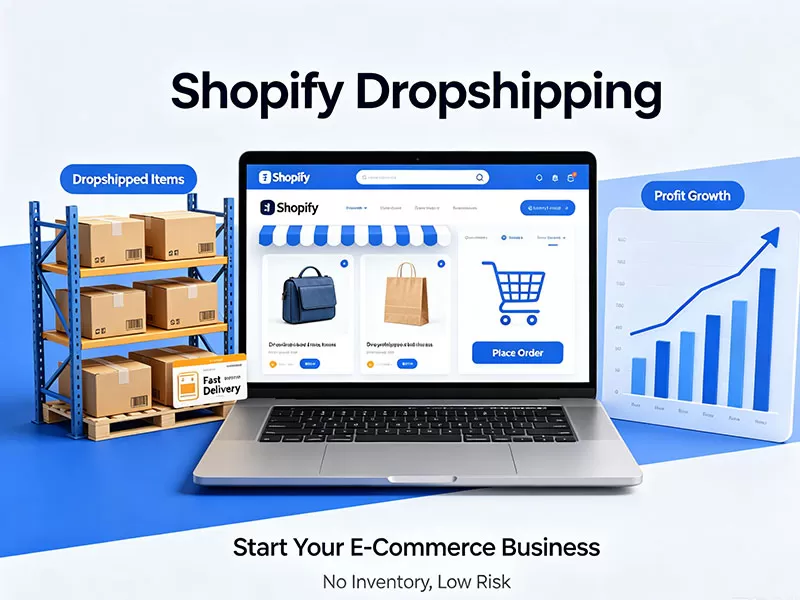
Shopify dropshipping is an eCommerce business model where store owners sell products through Shopify without stocking inventory themselves.
Instead of buying products in bulk, sellers partner with third-party suppliers who handle:
Product storage
Packaging
Shipping
Inventory management
When a customer places an order on your Shopify store, the order is automatically forwarded to the supplier, who then ships the product directly to the customer.
This model significantly lowers startup costs and makes it easier for beginners to enter global eCommerce markets.
Many people believe dropshipping is "too saturated", but the reality is that the market is evolving rather than disappearing.
In 2026, several trends continue to create strong opportunities:
Global consumers are increasingly purchasing products online instead of through traditional retail stores. Mobile commerce and social commerce are driving more traffic to independent Shopify stores than ever before.
Modern AI tools can now help sellers:
Analyze trends
Predict winning products
Generate product descriptions
Optimize ads
This dramatically reduces the learning curve for beginners.
Generic stores are fading, while niche-focused branded stores are becoming more profitable. Shopify is particularly strong for building long-term brand value compared to marketplace-based selling.
One of the biggest reasons Shopify dominates the dropshipping industry is its automation ecosystem.
With Shopify dropshipping apps, sellers can automate nearly every operational task.
Platforms like DSers, CJ Dropshipping, and AK Dropshipping allow merchants to import products directly into Shopify with just a few clicks.
Once customers place orders, the system automatically forwards the information to suppliers for fulfillment.
Stock quantities are updated in real time, reducing the risk of overselling products.
Tracking numbers and logistics updates are automatically synced back to the customer.
This level of automation allows even solo entrepreneurs to manage hundreds of orders efficiently.
| Feature | Shopify | WooCommerce | Yampi |
| Ease of Use | Very Easy | Moderate | Easy |
| Hosting Included | Yes | No | Yes |
| App Ecosystem | Excellent | Large | Limited |
| Dropshipping Support | Strong | Moderate | Moderate |
| Scalability | High | Medium | Medium |
Compared to WooCommerce, Shopify requires less technical knowledge. Compared to Yampi, Shopify offers stronger international scalability and a much larger app ecosystem.
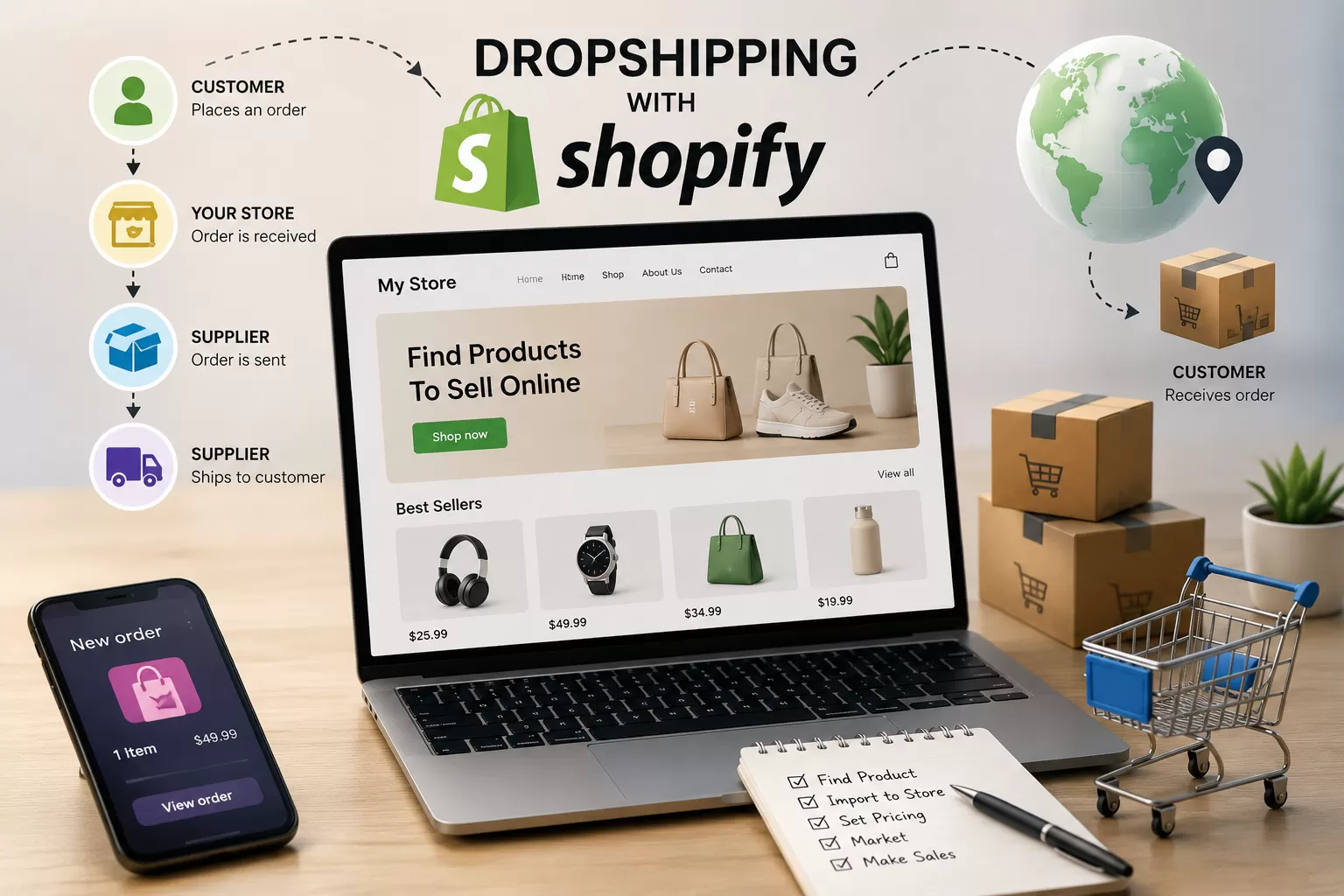
Shopify dropshipping works through automated coordination between your Shopify store and your supplier.
The typical workflow looks like this:
Customer places an order on your Shopify store
The order is automatically synced to the supplier
Supplier prepares and ships the product
Tracking information is synced back to Shopify
Customer receives the order
This process minimizes manual work and improves fulfillment efficiency.
Your supplier directly affects your customer experience.
Factors like shipping speed, packaging quality, inventory stability, and refund handling all influence store reputation and conversion rates.
Reliable suppliers such as AK Dropshipping provide professional dropshipping service, helping merchants streamline operations through:
Automatic order processing
One-on-one customer support
Real-time logistics tracking
Faster fulfillment services
A stable supplier relationship can significantly improve customer satisfaction and reduce operational risks.
Start by creating an account on Shopify and choosing a clean, brand-friendly domain name.
Choosing the trending dropshipping products is one of the most important steps in dropshipping success.
Popular sourcing platforms include:
AliExpress
CJ Dropshipping
AK Dropshipping
Focus on products with:
Strong demand
Good profit margins
Low return rates
Visual appeal for social media
A good supplier should provide:
Fast shipping
Stable inventory
Responsive communication
Competitive pricing
Reliable refund policies
Use Shopify-compatible apps to automate product importing and order fulfillment.
Popular apps include:
DSers
CJ Dropshipping
AK Dropshipping
Configure payment gateways such as:
PayPal
Shopify Payments
Stripe
Also set clear shipping rates and delivery expectations.
Most dropshipping stores target margins between 20%–50%, depending on the niche and advertising costs.
Avoid competing only on price. Branding and customer experience are often more profitable long term.
Before launching:
Place test orders
Verify checkout flow
Test shipping updates
Check mobile responsiveness
Traffic generation is essential for dropshipping success.
Effective marketing channels include:
Fixed Costs
Typical fixed expenses include:
| Expense | Estimated Cost |
| Shopify Subscription | $39/month |
| Domain Name | $10–20/year |
| Store Theme | $0–300 |
| Logo Design | $0–100 |
Advertising Costs
Most beginners underestimate marketing expenses.
Paid traffic sources may include:
TikTok Ads
Facebook Ads
Google Ads
Testing products usually requires an initial ad budget.
Software Costs
Additional software may include:
Email marketing tools
Upsell apps
Review apps
Dropshipping apps
Hidden Costs
Many new sellers forget about hidden operational costs such as:
Refunds
Chargebacks
Shipping delays
Lost packages
Working with suppliers that provide reliable return and refund policies can reduce these risks significantly.
For example, AK Dropshipping's return and refund support helps merchants lower testing costs while improving customer satisfaction.
Choosing the right products is often the biggest factor in dropshipping success.
The best Shopify dropshipping products usually share several characteristics:
Strong visual appeal
Problem-solving functionality
Impulse-buy potential
Low shipping complexity
Healthy profit margins
Below are some of the best product categories for Shopify dropshipping in 2026.
| Product Category | Why It Works | Beginner Friendly |
| Pet Products | High emotional buying behavior | Yes |
| Beauty Tools | Strong TikTok virality | Yes |
| Home Organization | Problem-solving products | Yes |
| LED Lights | Social media appeal | Yes |
| Fitness Accessories | Stable demand | Yes |
| Phone Accessories | Frequent purchases | Yes |
| Kitchen Gadgets | Demonstration-friendly | Yes |
| Car Accessories | High perceived value | Moderate |
Shopify dropshipping in 2026 is no longer about blindly uploading thousands of cheap products.
The market has evolved toward:
Branded stores
Better customer experience
Reliable suppliers
Long-term business building
Shopify provides one of the strongest ecosystems for entrepreneurs who want to build scalable eCommerce brands without managing inventory. By combining the right niche, automation tools, supplier partnerships, and marketing strategies, beginners can still build highly profitable Shopify dropshipping businesses in 2026 and beyond.