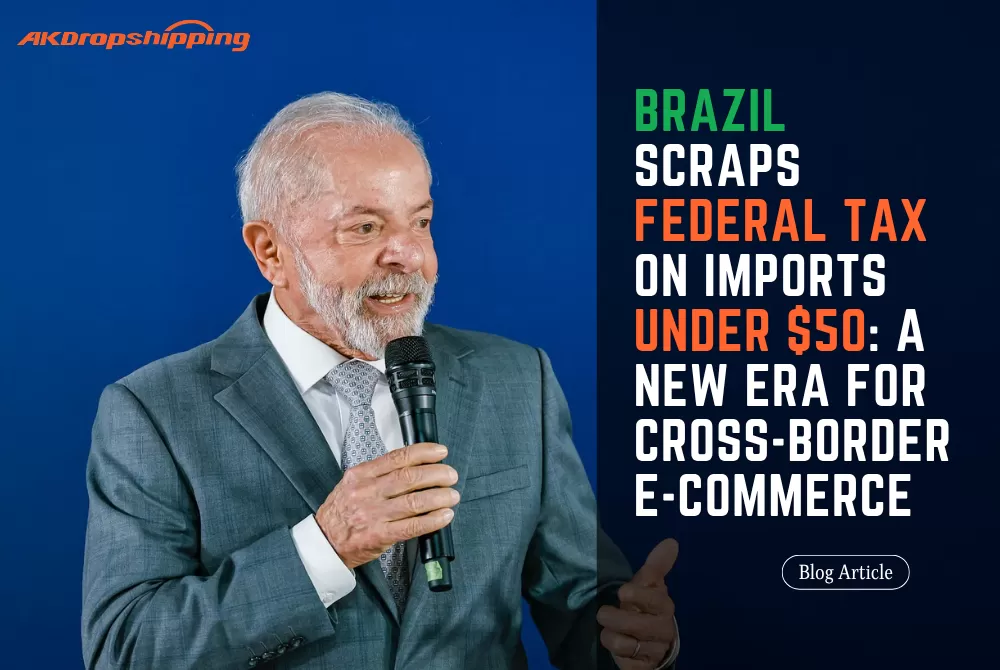
Brazil's cross-border e-commerce market is entering a new chapter. On May 12, 2026, Brazilian President Luiz Inácio Lula da Silva announced the removal of the federal import tax on international purchases valued under US$50, reversing the controversial “Blouse Tax” policy that had heavily impacted consumers, dropshipping businesses, and overseas sellers.
The decision is already sending strong signals across the global e-commerce industry. For Brazilian consumers, it means lower shopping costs and wider access to international products. For global sellers and dropshipping businesses, especially Shopify store owners, it could reopen one of Latin America’s most promising online retail markets.
On May 12, 2026, the Brazilian government officially ended the so-called Taxa das Blusinhas (Blouse Tax), a federal levy applied to low-value international imports.
Under the new policy, international packages valued below US$50 will no longer be subject to Brazil's federal import tax. This applies primarily to cross-border e-commerce orders purchased through international marketplaces and independent online stores.
However, the exemption does not eliminate all taxes. Brazil's state-level ICMS tax will still remain in effect, meaning consumers may continue paying certain regional taxes depending on their location and purchase category.
Even so, the removal of the federal tax is expected to significantly reduce the final purchase cost for Brazilian shoppers and improve pricing competitiveness for overseas sellers. The announcement has already generated strong reactions throughout the cross-border e-commerce sector, especially among Shopify merchants, dropshipping suppliers, and international logistics providers.
The term Taxa das Blusinhas became popular in Brazil after the government introduced taxes on low-cost imported products, especially inexpensive fashion items purchased from overseas platforms like Shein, AliExpress, and Shopee.
Before the policy was introduced, many Brazilian consumers regularly purchased low-value products from international sellers without facing significant import taxes. However, the federal government later expanded taxation measures to include imports under US$50, arguing that the policy was necessary to protect local retailers and improve tax fairness.
1. High Shopping Costs for Consumers
One of the biggest controversies surrounding the Blouse Tax was the dramatic increase in final product prices. In many cases, consumers saw imported products nearly double in price after taxes and processing fees were added.
For middle- and lower-income consumers, international e-commerce had become an affordable way to purchase clothing, electronics, accessories, and household products. The new tax structure reduced access to low-cost global products and triggered widespread public dissatisfaction.
2. Supply Chain Pressure on Dropshipping Businesses
The policy also created major operational pressure for cross-border e-commerce businesses and dropshipping platforms.
Companies such as AK Dropshipping faced increasing difficulty maintaining competitive pricing under the old tax system. Higher import costs weakened profit margins for Shopify sellers and reduced the attractiveness of the Brazilian market for international merchants.
For many dropshipping entrepreneurs, Brazil shifted from being a high-growth opportunity to a high-risk market almost overnight.
3. Social and Economic Debate
Critics argued that the tax disproportionately affected lower-income consumers who relied on affordable imported goods. Supporters of the policy, however, including local retail groups and parts of the government, claimed the tax was necessary to protect domestic businesses from unfair overseas competition.
The controversy also highlighted Brazil's historically complex tax system and long-standing import protection policies, which have often created challenges for international commerce and logistics operations.
The removal of the federal tax is expected to deliver immediate benefits to the entire ecosystem.
1. Lower Prices and More Shopping Choices
Imported fashion, consumer electronics, and beauty items are set to become affordable again. This policy is expected to drive a massive return of consumers to international shopping platforms that had seen a dip in activity over the last year.
2. Recovery of the Dropshipping Ecosystem
For local dropshipping entrepreneurs targeting the Brazilian audience, reduced costs mean restored profit margins and higher customer conversion rates. Industry analysts predict a new Gold Rush as sellers regain confidence in the region’s high-growth potential.
3. ICMS Tax Still Exists
It is vital to note that international shopping is not becoming completely tax-free. According to a recent Reuters report, the executive order only eliminates the federal levy. The state-level ICMS tax (typically around 17%) will continue to apply. Sellers must still ensure their pricing strategies account for ICMS compliance to avoid delays at customs.
For international e-commerce sellers, the policy change represents a major opportunity to re-enter the Brazilian market with renewed confidence.
1. Lower Entry Barriers for Shopify and Dropshipping Sellers
With the federal tax removed, Shopify independent stores and dropshipping business models may once again become highly competitive in Brazil.
Lower import costs can improve conversion rates, reduce cart abandonment, and make pricing more attractive to Brazilian consumers. Sellers who previously paused operations in Brazil may now reconsider expanding into the region.
As one of the largest e-commerce markets in Latin America, Brazil continues to offer enormous long-term growth potential for cross-border businesses.
2. AK Dropshipping Has Adapted to the New Policy
AK Dropshipping has already adapted its supply chain and logistics systems to align with the new Brazilian import policy.
With a professional sourcing team, optimized fulfillment solutions, and extensive dropshipping experience, AK Dropshipping is helping global sellers quickly respond to Brazil's changing market environment.
For sellers who previously struggled with rising taxes and shrinking margins, this policy shift presents a strong opportunity to return to the Brazilian market and rebuild momentum.
3. AK Dropshipping Promotional Incentives
To support new and returning sellers, AK Dropshipping is also launching incentive programs:
New Customer Bonus
Complete 20+ orders and receive a US$20 cashback reward
Complete 100+ orders and receive US$50 cashback
Referral Bonus
Refer 3 new customers with completed orders and receive US$30
Refer 5+ successful customers and receive US$50
These programs are designed to encourage sellers to seize the new market opportunity while reducing operational pressure during expansion.
4. Logistics and Compliance Still Matter
Despite the tax exemption, businesses must continue paying close attention to:
ICMS state taxes
Brazilian customs regulations
Import documentation requirements
Potential future tax reforms
Efficient logistics management and local compliance strategies will remain essential for long-term success in Brazil.
Although the removal of the federal tax is widely celebrated, uncertainty still remains regarding Brazil's future tax policies.
1. Ongoing Tax Reform Discussions
Brazil continues to undergo broader tax reform discussions, and future adjustments to import regulations are still possible. Political changes, economic pressures, and lobbying from domestic retail industries may all influence future policy decisions.
2. Pressure from Local Retailers
Domestic retailers who previously supported the “Blouse Tax” may continue pushing for stronger import controls in order to reduce overseas competition.
As cross-border e-commerce grows again, the government could face renewed pressure to balance consumer affordability with local business protection.
3. Toward More Digital and Transparent Regulation
At the same time, Brazil is expected to continue modernizing its customs and taxation systems.
Future cross-border regulation may become more digitalized, automated, and transparent, allowing authorities to improve tax collection efficiency while simplifying international trade procedures for compliant businesses.
For global sellers, staying updated on Brazilian regulatory changes will be critical for maintaining stable operations in the market.
The decision to scrap the federal tax on imports under US$50 is a watershed moment for Brazil’s digital economy. It lowers the barrier for consumers and creates a fertile ground for Shopify sellers and dropshipping entrepreneurs to thrive.
While the federal tax is gone, navigating the remaining ICMS and customs procedures remains a technical challenge. Partnering with experienced providers like AK Dropshipping ensures that sellers can capitalize on this new era with competitive pricing and reliable delivery, securing long-term growth in Latin America’s most dynamic market.