Q4 is the most competitive and profitable season for ecommerce sellers. Black Friday, Cyber Monday (BFCM), Christmas shopping, and year-end promotions all happen within a short buying window. For dropshipping sellers, the difference between a successful Q4 and a stressful one usually comes down to early product selection, inventory planning, supplier coordination, and fulfillment capacity.
In 2025, Shopify merchants generated $14.6 billion in Black Friday Cyber Monday sales, while NRF reported a record 202.9 million consumers shopping during the Thanksgiving-to-Cyber-Monday weekend. These numbers show why sellers should treat Q4 as a supply chain project, not just a marketing campaign.
In this guide, you'll learn:
Why Q4 is critical for ecommerce growth
When to begin preparing for Black Friday
A month-by-month Q4 preparation timeline
How to optimize your inventory, suppliers, and marketing
Supply chain challenges during peak season
How AK Dropshipping helps sellers scale efficiently during Q4
Whether you're launching your first holiday campaign or preparing to scale an established store, this guide will help you build a smoother and more profitable Q4 strategy.
Q4 is the peak ecommerce season because consumer demand, promotional activity and gift-buying intent rise together from October through December.
Black Friday and Cyber Monday are no longer single-day events; many sellers now operate a “Black November” campaign structure with early testing, warm-up offers and rolling discounts. Adobe reported strong online holiday performance in 2025, with mobile accounting for 56.4% of online shopping transactions, showing that sellers must optimize both mobile UX and fulfillment readiness before peak traffic arrives.
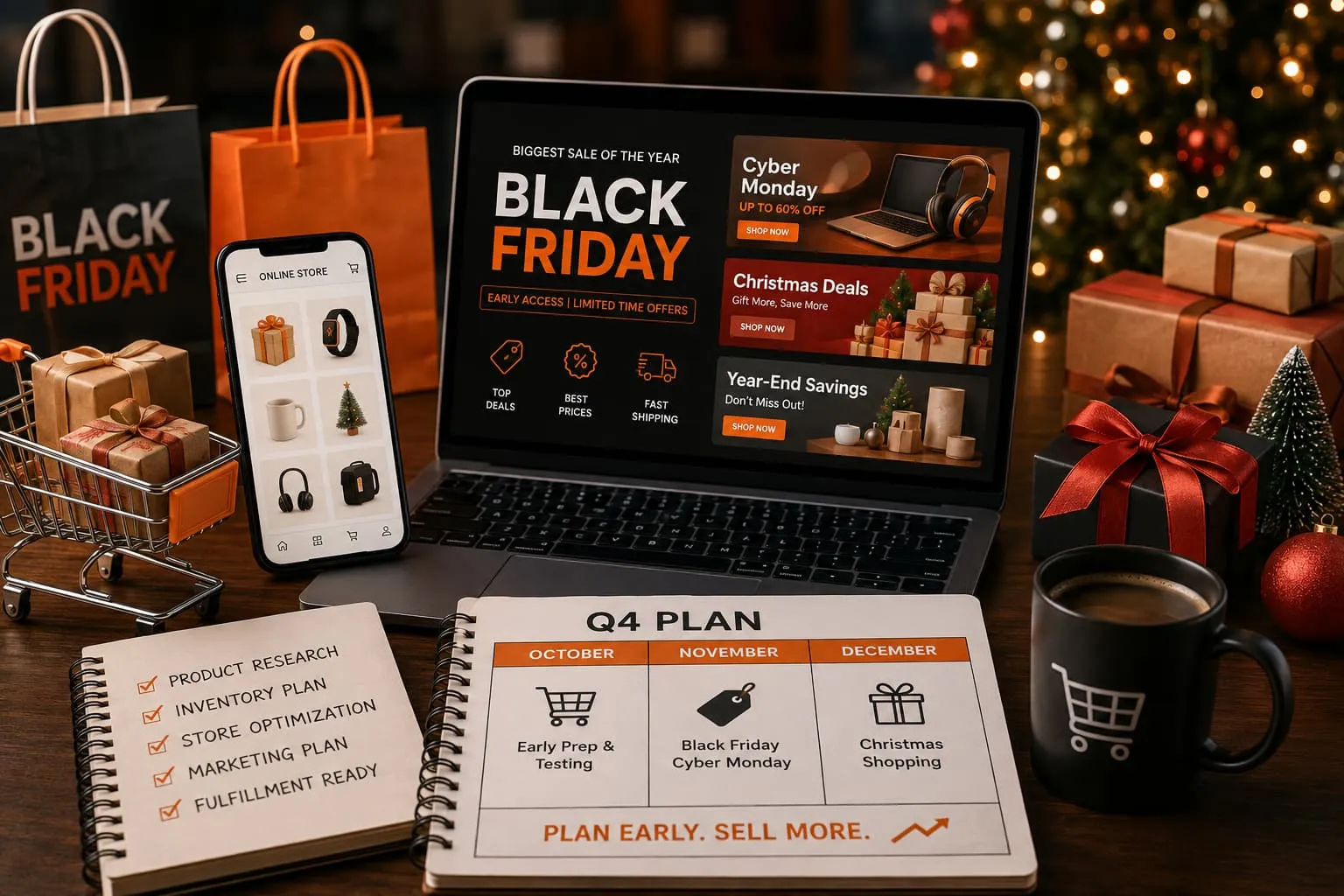
Black Friday is the strongest promotion trigger for ecommerce sellers because customers actively compare prices, bundles and shipping terms. Sellers should prepare offer structures, landing pages, ad creatives and inventory before November rather than waiting for the final week.
Cyber Monday is usually more digital-native and conversion-focused, making it ideal for bundles, last-chance discounts, retargeting and email flows. Sellers should ensure checkout, payment, tracking and order sync are stable before traffic spikes.
Christmas shopping creates demand for gifts, home products, lifestyle items, toys, accessories and seasonal decorations. Shipping cutoffs matter more than discount depth, so sellers should clearly communicate delivery expectations.
Year-end buyers often look for gifts, home upgrades, self-care products and practical items. For dropshipping stores, the safest product strategy is to combine trend-driven products with reliable supply and fast fulfillment.
A Q4 ecommerce timeline is a staged preparation plan that helps sellers move from product research to testing, scaling and last-minute fulfillment control.
Timeline | Main Goal | What Sellers Should Do |
September | Preparation Phase | Confirm product shortlist, suppliers, pricing, samples and store pages |
October | Testing Phase | Test ads, creatives, bundles, landing pages and fulfillment workflow |
November | Scaling Phase | Scale winning products, lock inventory and manage customer communication |
December | Delivery Control | Focus on shipping cutoffs, customer service, gift messaging and returns |
September should be used for product research, supplier screening, sample checking and store optimization. Sellers should avoid choosing products only by TikTok or marketplace popularity; Q4 winners also need stable supply, acceptable shipping weight and good packaging quality.
October is the best month to test product angles, ads, landing pages and pricing. A product that cannot convert with small-budget testing may become expensive to scale during Black Friday.
November is for scaling what already works. Sellers should not overload suppliers with sudden untested products; instead, they should focus on products with verified demand, stable stock and clear margins.
Q4 product selection should focus on giftability, practical use, seasonal relevance and fulfillment reliability.
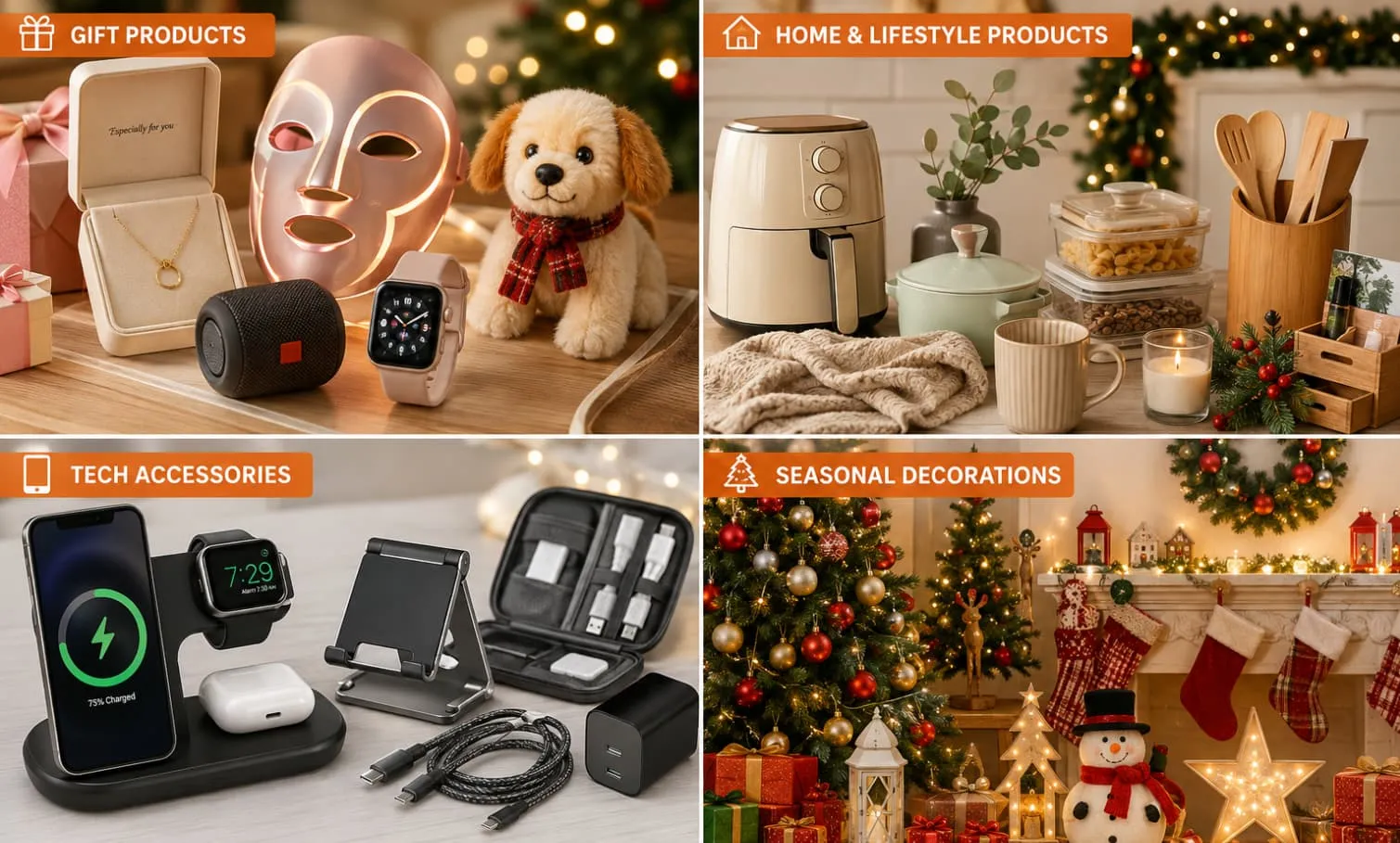
Gift products perform well because they match the emotional buying intent of Black Friday and Christmas. Examples include personalized accessories, beauty tools, small gadgets, pet gifts and affordable lifestyle items.
Home products often perform strongly because consumers prepare for gatherings, decoration and winter routines. Kitchen tools, organizers, small home upgrades and comfort products can work well if they are easy to ship.
Tech accessories are attractive because they have strong gift potential and repeat demand. Sellers should check compatibility, packaging, quality inspection and return risk before scaling.
Seasonal decorations can create quick Q4 sales, but timing is critical. Sellers should source early and avoid products that arrive too close to Christmas.
AK Dropshipping’s winning products page can help sellers review product ideas and request sourcing support before peak season.
Supply chain challenges before Black Friday include inaccurate demand forecasts, supplier delays, warehouse congestion, shipping capacity limits and rising customer expectations.
Inventory forecasting is difficult during Q4 because demand can change quickly after ads, influencer posts or marketplace trends. Sellers should estimate conservative, expected and aggressive demand models. Working with a flexible warehousing partner allows you to reserve stock upfront without paying traditional long-term storage fee.
Supplier coordination should start before October. Sellers need to confirm production lead time, packaging requirements, MOQ, sample quality, backup suppliers and restock speed.
Shipping capacity becomes tighter during peak season. Sellers should confirm carrier options, average delivery time, tracking availability and cutoff dates before launching aggressive campaigns.
Customers expect fast updates, clear tracking and honest delivery estimates. If shipping takes longer during Q4, the store should communicate this before purchase rather than after complaints appear.
Black Friday store preparation means improving product pages, pricing, offers, checkout flow, marketing assets and customer communication before traffic peaks.
Product pages should clearly explain benefits, size, materials, shipping time, return policy and FAQs. Mobile speed and checkout clarity are especially important because mobile commerce dominates holiday shopping behavior.
A good Q4 offer is not always the deepest discount. Bundles, quantity breaks, free shipping thresholds, limited-time gifts and private label packaging can increase average order value without destroying margins.
Sellers should prepare ad creatives, email flows, abandoned cart recovery, retargeting audiences and influencer content before Black Friday week. The Adobe holiday shopping report is useful for understanding how online spending, mobile shopping and product demand shift during the holiday season.
For additional guidance, sellers can review Shopify's Black Friday Checklist 2025 which covers 25 actionable preparation steps for BFCM success.
Preparing for Q4 requires more than sourcing products-it requires a reliable operational partner capable of supporting your business as order volume grows.
AK Dropshipping provides end-to-end fulfillment services that help ecommerce sellers reduce operational complexity while improving delivery efficiency.
Finding reliable suppliers during Q4 can be challenging, especially when demand increases across multiple marketplaces.
AK Dropshipping works directly with manufacturers to help sellers:
Source competitive products
Compare supplier quotations
Find alternative suppliers
Negotiate purchasing costs
Reduce sourcing time
This allows sellers to spend less time managing suppliers and more time growing their business.
For Q4, even a small defect rate can become expensive when order volume increases.
AK Dropshipping inspects products before shipment to help reduce:
Defective products
Incorrect items
Packaging issues
Customer complaints
Return rates
Consistent quality control protects both customer satisfaction and brand reputation.
For sellers expecting increased order volume, pre-stocking inventory can significantly improve fulfillment efficiency.
AK Dropshipping's Cloud Warehouse offers:
Free warehousing
Faster order processing
Better inventory management
Reduced stockout risks
Improved shipping speed during peak season
Pre-positioning inventory also minimizes delays caused by supplier production schedules.
Automated fulfillment helps reduce manual order processing errors during peak traffic.
AK Dropshipping's automated fulfillment system helps streamline operations by supporting:
Automatic order synchronization
Product mapping
Order processing
Tracking number synchronization
Global shipping management
Automation reduces manual errors while allowing sellers to focus on marketing and customer growth.
Branding can help sellers move beyond short-term discount competition.
Rather than competing solely on price, sellers can differentiate themselves through:
Custom packaging
Private label products
Branding inserts
Logo printing
Personalized customer experiences
AK Dropshipping supports private label dropshipping services that help ecommerce business build stronger brand recognition and improve long-term customer retention.
A Black Friday readiness checklist is a final operational review that helps sellers confirm products, inventory, website performance, marketing assets and fulfillment workflow before the peak sales window.
Confirm product categories, supplier options, sample quality, branding needs and target markets. Build the product page structure and collect product photos, specs and shipping information.
Start testing ads, product pages, pricing, bundles and customer support scripts. Confirm whether products should be stocked in advance or fulfilled after order placement.
Lock promotional calendar, inventory plan, fulfillment workflow, email campaigns and shipping messages. Create backup plans for best-selling products and alternative suppliers.
Check checkout, payment, tracking sync, customer service templates and shipping cutoff messages. Do not launch a new untested product at the last moment unless supply and fulfillment are already verified.
Q4 ecommerce success depends on preparation, not luck. Sellers who wait until Black Friday week often face high ad costs, supplier delays, inventory shortages and customer service pressure. Sellers who start earlier can test products, secure supply, optimize offers and build a more reliable fulfillment workflow.
AK Dropshipping helps ecommerce sellers prepare for Q4 with sourcing, procurement, warehouse storage, quality inspection, automated fulfillment, global shipping and private label support. For stores planning to scale during Black Friday, Cyber Monday and Christmas, working with an operational partner can reduce risk and create more room for growth.
Sellers should start 60–90 days before Black Friday. Product sourcing, supplier confirmation, sample testing and page optimization should happen before November.
Gift products, home and lifestyle items, tech accessories, seasonal decorations, beauty tools, pet products and practical daily-use items often perform well during Q4.
Inventory planning helps prevent stockouts, shipping delays and missed sales. Peak-season demand can rise quickly, so sellers should prepare multiple demand scenarios.
They can work with a fulfillment partner, confirm supplier capacity, inspect product quality, prepare backup products, clarify shipping times and automate order processing.
Yes, when timing and budget allow. Private label packaging can improve brand perception, repeat purchase potential and customer trust during a competitive season.
AK Dropshipping provides product sourcing, procurement, warehousing, quality inspection, automated fulfillment, global shipping and private label services to help ecommerce sellers scale more safely during Q4.